In the rapidly evolving world of digital marketing, AI SEO is no longer a futuristic concept—it has become the backbone of smarter, faster, and more efficient search engine optimization strategies. Businesses today are not just optimizing for search engines but also for user intent, behavior, and personalization. From content creation to predictive analytics, artificial intelligence is transforming every aspect of SEO.
It enables brands to stay ahead of competitors, deliver tailored user experiences, and quickly adapt to ever-changing search engine algorithms.As we move into 2026, understanding how AI integrates with SEO is essential for long-term success. This blog explores the latest SEO trends, powerful AI SEO tools, and practical strategies that businesses can use to improve rankings, traffic, and overall digital performance.
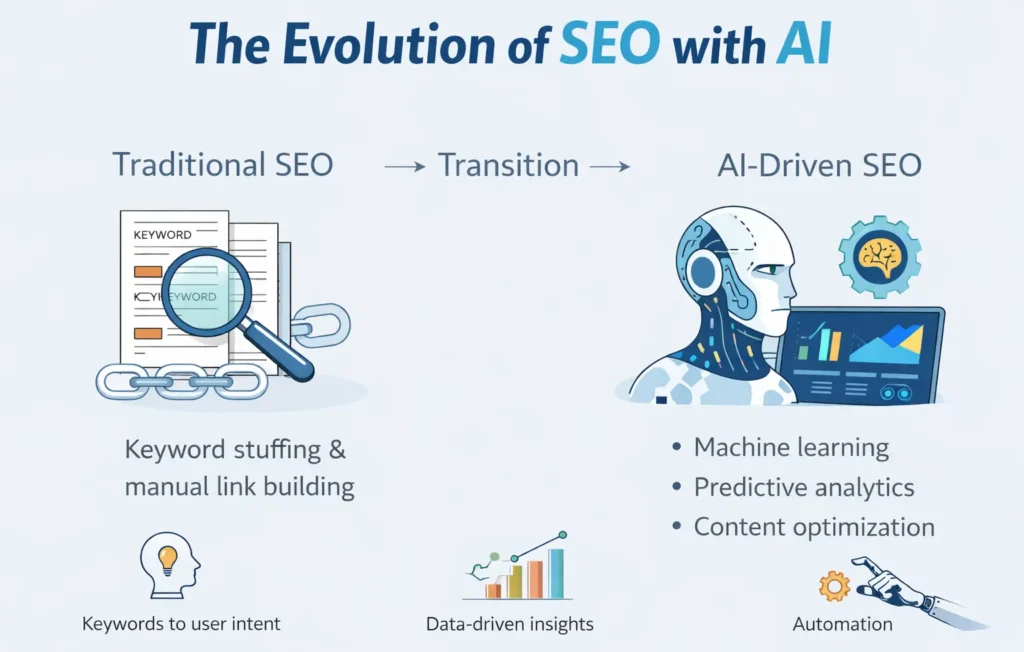
The Evolution of SEO with AI
SEO has significantly evolved over the years. What once relied heavily on keyword stuffing and basic link-building has now transformed into a sophisticated process driven by data and intelligence. The integration of AI in SEO has completely changed how marketers approach optimization.
Artificial intelligence uses technologies like machine learning and natural language processing to analyze large amounts of data in real time. This allows businesses to identify search trends, automate repetitive tasks, and optimize content with a high level of accuracy. Instead of guessing what users want, AI helps marketers understand user intent and predict future search behavior. This data-driven approach gives businesses a strong competitive advantage and helps them deliver more relevant and personalized content.
AI in Keyword Research
Keyword research remains one of the most important aspects of SEO, but AI has made it far more advanced and efficient. Traditional keyword research methods often required manual effort and limited data analysis. With AI, marketers can now uncover deeper insights and opportunities.
Modern AI SEO tools can generate keyword ideas based on real-time search trends and user behavior. They also analyze competitor strategies and predict keyword performance, helping businesses focus on terms that are more likely to drive results. AI can easily identify long-tail keywords, seasonal trends, and semantic relationships between search queries. This means content can be optimized more naturally, improving both readability and rankings on search engine results pages.
Content Creation and Optimization with AI
Content creation is one of the areas where AI has made the biggest impact. Businesses can now create high-quality, SEO-optimized content at scale. AI tools assist in generating blog posts, articles, and product descriptions that are aligned with user intent.
Beyond content creation, AI also plays a key role in content optimization. It helps improve keyword placement, readability, and overall engagement. By analyzing factors such as relevance, structure, and topic coverage, AI tools provide content scores that guide marketers in refining their content. This ensures that every piece of content meets SEO standards and performs well in search rankings.
AI in Technical SEO
Technical SEO has always been complex, but AI is making it much easier to manage. Tasks that once required hours of manual work can now be automated efficiently. AI tools can perform detailed website audits, detect broken links, identify duplicate content, and highlight indexing issues.
In addition, AI helps optimize important technical factors like page speed, image performance, and structured data. These improvements not only enhance search engine crawlability but also improve user experience, which is a critical ranking factor. As search engines continue to prioritize fast and user-friendly websites, AI-driven technical SEO becomes even more valuable.
Voice Search and AI
Voice search is becoming increasingly popular, and AI plays a crucial role in optimizing content for this trend. Unlike traditional search queries, voice searches are more conversational and often longer in format. Users tend to ask complete questions instead of typing short keywords.
AI helps marketers adapt to this change by optimizing content for natural language queries. Creating content that answers specific questions, includes conversational keywords, and targets featured snippets can significantly improve visibility in voice search results. As more users rely on voice assistants, optimizing for voice search will be a key SEO strategy in 2026.
AI-Powered SEO Analytics
Data analysis is at the core of successful SEO strategies, and AI makes this process faster and more accurate. AI-powered analytics tools provide deep insights into user behavior, traffic patterns, and content performance. Instead of relying on assumptions, businesses can make informed decisions based on real data.
Predictive analytics is another major advantage of AI. It allows marketers to anticipate algorithm changes, identify emerging trends, and adjust strategies before competitors. By tracking key performance indicators such as click-through rates, engagement, and conversions, businesses can continuously improve their SEO efforts and maximize return on investment.
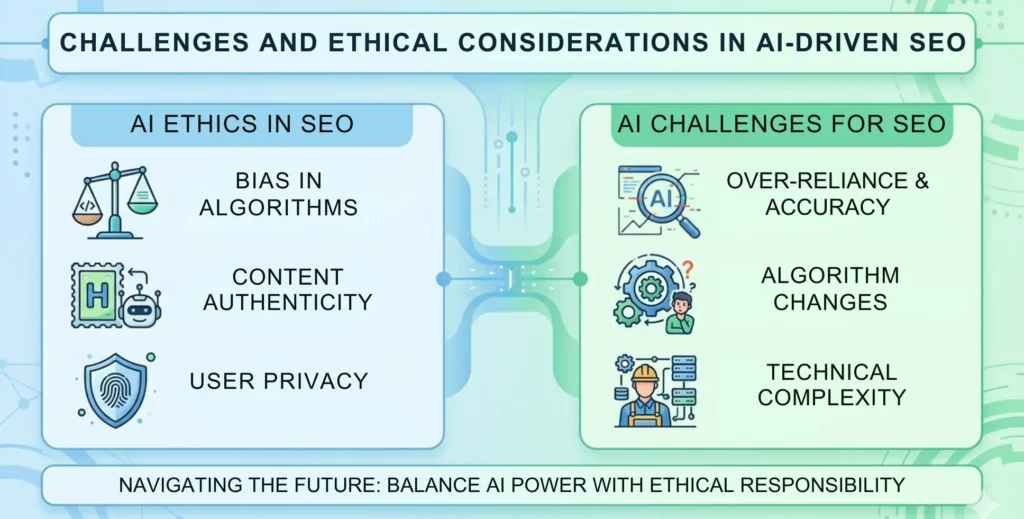
Challenges and Ethical Considerations
While AI offers many benefits, it also comes with certain challenges. Over-reliance on automation can lead to issues such as duplicate content or lack of originality. There is also the risk of algorithm bias, which can affect the accuracy of results.
To overcome these challenges, businesses should focus on maintaining content quality and authenticity. AI should be used as a support tool rather than a complete replacement for human expertise. Combining AI insights with human creativity ensures the best possible outcomes and helps maintain trust and transparency.
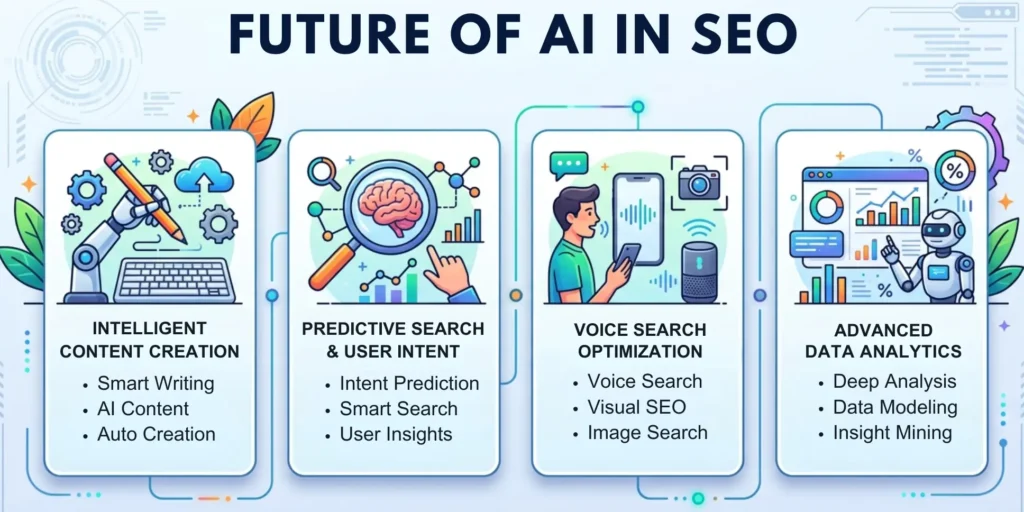
Future of AI in SEO
The future of SEO is clearly AI-driven and highly personalized. As technology continues to advance, businesses will be able to deliver more tailored experiences based on user preferences and behavior. Trends such as chatbot marketing, zero-click searches, and predictive analytics will shape the next phase of SEO.
Hyper-personalization will play a major role in improving user engagement and conversions. Search engines will continue to prioritize content that provides value and matches user intent. Businesses that adopt AI early and use it strategically will have a significant advantage in the competitive digital landscape.
Conclusion
In 2026, integrating AI into your SEO strategy is no longer optional—it is essential. AI helps businesses work more efficiently, make smarter decisions, and achieve higher rankings. From keyword research and content creation to technical SEO and analytics, AI is transforming every part of the optimization process.
However, the key to success lies in balancing AI capabilities with human creativity. Businesses that combine both will not only improve their search rankings but also build stronger connections with their audience and stay ahead in the ever-changing world of digital marketing.
FAQ
What is AI SEO and why is it important?
AI SEO uses artificial intelligence to automate and improve SEO strategies. It helps increase accuracy, save time, and deliver more personalized user experiences.
How do AI tools improve content quality?
AI tools analyze readability, suggest keywords, and optimize content based on user intent, making it more effective and engaging.
Can AI replace human SEO professionals?
No, AI supports SEO professionals but does not replace them. Human creativity and strategy are still essential for achieving the best results.